
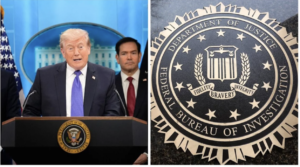
WASHINGTON — As federal investigators scramble to assess a suspected cyber intrusion into the FBI’s National Crime Information Center (NCIC)—the real-time criminal justice database relied upon daily by tens of thousands of police officers nationwide—President Donald Trump offered an unexpected reaction over the weekend, suggesting the breach could ultimately bring old political grievances to light.
Speaking during a Saturday phone interview with Fox News, Trump acknowledged the intrusion before pivoting to what he called a “positive spin.”
“Well, we just heard about it, and I will say that it’s not good. I don’t like that, but maybe we’ll learn things that we would have never learned otherwise,” Trump said. “Because, you know, you had the Russia, Russia, Russia hoax. You had all of these other hoaxes. We call it Ukraine, the Ukraine, Ukraine, Ukraine hoax… Maybe we’ll learn about the voter fraud, all the voter fraud that took place. And so I always like to put things on a positive spin.”
Law enforcement officials note that the NCIC—which indexes active arrest warrants, missing persons, stolen vehicles, gang affiliations, and criminal histories—does not house classified counterintelligence files, impeachment records, or election administration data. The FBI has declined to comment publicly on who breached the system or what data may have been accessed.
Frontline Safety Risks vs. White House Downplaying
While the president framed the breach around political narratives, former federal law enforcement officials warn that any compromise of the NCIC poses immediate operational risks for street-level policing.
Maintained by the FBI’s Criminal Justice Information Services Division in West Virginia, the system connects more than 90,000 federal, state, and local criminal justice agencies. Retired FBI Supervisory Special Agent Jason Pack noted that because thousands of local police terminals feed into the network, tracing the entry point is complex—and verifying record integrity is critical.
“Officers need to know that when they run somebody through NCIC, the information coming back is accurate,” Pack said. “Because sometimes that information can mean the difference between an officer going home at the end of a shift or not.”
The disclosure also lands amid a wider shakeup in Washington’s cybersecurity leadership: just days before news of the NCIC intrusion broke, Trump dismissed White House National Cyber Director Sean Cairncross and named Department of War official Kirsten Davies as his replacement, following a week marked by major FAA airspace outages, banking glitches, and a cyberattack on U.S. Department of Agriculture payment systems.
A Troubling Pattern: The FBI’s Previous 2026 Cyberattacks
Saturday’s revelation marks at least the third significant cyber breach to hit FBI systems in 2026, intensifying bipartisan scrutiny over the bureau’s digital defenses:
September 2026 — The FBIJobs.gov Recruitment Breach: In late September, a cybercriminal group compromised the bureau’s official hiring portal (
FBIJobs.gov), claiming to have exfiltrated sensitive personally identifiable information—including background check records, Social Security numbers, and employment histories—belonging to thousands of current FBI personnel and job applicants.March 2026 — Internal Surveillance Network Intrusion: Earlier in the year, the bureau confirmed it was investigating “suspicious activities” on an internal system containing sensitive records tied to active investigations and surveillance operations, an intrusion attributed by U.S. officials to sophisticated state-backed hackers.
As cyber investigators work to determine whether foreign intelligence services or criminal extortion groups are behind the latest breach, local police departments across the country remain on alert awaiting guidance on whether NCIC records were copied or altered.