
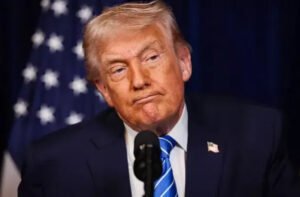
Former President Donald Trump has issued a stark warning that has sent shockwaves through immigrant communities and civil rights groups across the United States, suggesting that some Americans could lose their citizenship if he follows through on renewed plans to expand denaturalization efforts.
Trump has said he would move to strip citizenship from certain naturalized Americans “in a heartbeat” if he believed he had the authority to do so.
Denaturalization—the legal process of revoking U.S. citizenship from someone who was naturalized—has existed in American law for decades. Traditionally, it is used in rare cases involving serious crimes such as terrorism, war crimes, or proven fraud during the naturalization process.
However, Trump has long argued that the system has been abused and that citizenship was improperly granted under previous administrations.
Naturalization, according to USA.gov, is a voluntary process that allows immigrants to become U.S. citizens after meeting strict requirements. Applicants must be at least 18 years old, demonstrate basic English proficiency, pass a civics test, and show what the government calls “good moral character.” For generations, this process has symbolized the final step of integration into American society.
Despite that history, Trump has repeatedly signaled his desire to revisit how citizenship is granted—and potentially taken away. In remarks made in early December, he stated that he was “absolutely” considering denaturalizing certain Americans whom he claimed entered the country illegally and later became citizens through what he described as administrative failures.
“We have criminals that came into our country, and they were naturalized maybe through [President Joe] Biden or somebody that didn’t know what they were doing,” Trump said at the time. He added that if he had the power to revoke their citizenship, he would do so without hesitation.
Now, reports suggest those comments may not have been mere rhetoric. According to The New York Times, which recently conducted a lengthy interview with Trump, his administration has been examining the criteria used to revoke citizenship, signaling a more aggressive stance on denaturalization. Trump reportedly told the paper that certain immigrant communities would be scrutinized more closely, making remarks about immigrants from Somalia that immediately drew criticism.
While Trump did not specify all groups that could be targeted, his comments fueled fears that denaturalization could be applied more broadly, rather than being limited to extreme and well-documented cases.
Civil liberties organizations were quick to respond. The American Civil Liberties Union (ACLU) issued a strongly worded statement warning that expanded denaturalization efforts could have a chilling effect on millions of Americans.
“These efforts to strip citizenship from Americans are systemic and chilling,” the ACLU said. “They have made U.S. citizens fearful that mistakes made years ago on their past applications could be used to target them, take away their citizenship, and destroy their lives.”
The organization also warned that such policies discourage lawful permanent residents from applying for citizenship at all. “What was once a celebratory moment recognizing an immigrant’s integration into American life now comes with an undercurrent of fear and suspicion,” the statement added.
Legally, denaturalization remains a difficult and lengthy process. Citizenship can only be revoked through a judicial order, either in civil court or following a criminal conviction for naturalization fraud. As a result, such cases are extremely rare.
According to the Immigrant Legal Resource Center (ILRC), between 1990 and 2017, the U.S. government opened an average of just 11 denaturalization cases per year. Whether Trump’s renewed push could significantly increase that number remains uncertain, but for many naturalized Americans, the warning alone has already sparked deep anxiety about their future.